USDA Loan Requirements:Zero Down Payment Mortgage Explained
A USDA loan lets eligible buyers finance a home in a qualifying rural or suburban area with no down payment and no monthly mortgage insurance. But USDA loan requirements are stricter than most buyers expect — income limits, property rules and credit minimums all apply. This guide walks through every requirement, with examples, in plain language.
Saman Khanian
Author & Mortgage Professional

Eligible borrowers
0% down payment
USDA Single Family Housing Guaranteed Loan Program
USDA loan requirements start with four things: the property must be in an eligible rural area, your household income must fall under the program limit for that county, you generally need a credit score of at least 640 with a participating lender, and you must use the home as your primary residence. If you meet them, a USDA guaranteed loan can finance up to 100% of the purchase price — a true zero down payment mortgage.
It is not limited to farms. Many small towns and the outskirts of metro areas are USDA-eligible too. Below we break down each requirement, the income and property rules, the fees and closing costs to expect, and how a USDA loan compares to FHA, VA and conventional financing.
Down payment
0%
USDA guaranteed loans finance up to 100% of the purchase price
Location
Rural-eligible
Property must fall inside an eligible rural area map
Credit
640 +
Typical lender minimum; other requirements apply when lower
Upfront fee
1%
Guarantee fee, commonly financed into the loan balance
In This Guide
What Is a USDA Loan — and Who Offers It?
A USDA loan is a mortgage backed by the USDA Rural Development agency. Officially called the Single Family Housing Guaranteed Loan Program, it is designed to help low- and moderate-income buyers purchase homes in rural and semi-rural communities that other programs often overlook.
The USDA does not lend directly on the guaranteed program. Instead, it backs a portion of the loan for private lenders like Equitable Lending, which underwrites and funds the mortgage using USDA guidelines. There is a separate direct program from Rural Development for very low-income households, but the guaranteed program is the one most buyers use.
Because the USDA guarantee reduces a lender's risk, lenders can offer flexible credit and down payment terms. The trade-off is the package of USDA loan requirements we cover below — most notably the location and income limits.
Guaranteed program
Up to 100% financing
No down payment required for eligible buyers
Backed by the USDA
The U.S. Department of Agriculture (USDA) guarantees a portion of each loan, which lets lenders approve buyers with slim savings.
100% financing
The guaranteed loan can cover the full purchase price — no down payment — and the guarantee fee can usually be financed too.
No monthly PMI
Unlike FHA loans, a USDA loan does not carry monthly mortgage insurance. There is a smaller annual fee paid monthly.
Income and location limits
The trade-off for missing a down payment is that both the property location and the household income are capped.
Who Is Eligible for a USDA Home Loan?
You are a strong candidate for a USDA loan when you can check each of these boxes. Missing one does not end the conversation — a loan officer can often tell you whether an exception applies.
You have a steady, documented income
W-2, self-employed, retirement or other income accepted under USDA guidelines, documented the way your lender requires.
Your household income is under the limit
Income from all adults in the household must fall at or below 115% of the area median for your county.
You will live there full time
Primary residence only. USDA guaranteed loans are not available for investment or second homes.
The home is in an eligible area
The address must be inside a USDA rural-eligible zone according to the official eligibility map.
Your credit history is acceptable
A 640+ score meets the typical lender standard; lower scores may be possible with compensating factors.
Your budget supports the payment
Debt-to-income ratio, reserves and residual income must fit within program and lender guidelines.
Not sure whether your address or income qualifies?
Explore Your Loan OptionsCore USDA Loan Requirements
Every requirement below is reviewed somewhere in the process — some by the USDA at pre-approval, others by the lender during underwriting, and several at the property and closing stages.
Property location
The home must be in a USDA-eligible rural area. The USDA eligibility map is the only definitive source — many towns of a few thousand people qualify even if they appear suburban.
Household income
The total income of everyone who will live in the home (including adults who will not be on the loan) is compared with the county limit.
Primary residence
You must occupy the property as your main home. The program does not allow rentals, second homes or investment properties.
US citizenship or eligible status
The borrower must be a U.S. citizen, U.S. non-citizen national or qualified alien with a valid Social Security number and legal residency.
Credit and debt profile
Lenders typically require a 640 credit score; USDA also reviews debt-to-income, residual income and any federal liens or defaults.
Safe, sound property
The home must be structurally sound, free of specific health and safety hazards, and meet USDA minimum property standards.
Documented income and assets
You will need to verify income, employment history and the source of any gift funds used for closing costs or reserves.
No prohibitive existing home
In general, you cannot apply for USDA financing if you already own another home that you could occupy — there are limited exceptions.
USDA Loan Income Limits, Explained
The income test is the requirement that surprises buyers most. The USDA caps household income at 115% of the area median income for your county. It counts the earnings of every adult who lives in the home — including a spouse, partner or roommate who will not be on the loan.
The limit is based on the location and the number of people in the household, not on the home's price. That means a buyer earning well above the local median can still qualify in some counties, while another buyer in a low-income county may fall just outside the cap.
Important: The figures in the table are illustrative examples only. USDA publishes the real limits for every county and household size each year. Ask your loan officer for the current limit for the exact address you are considering — it is the only reliable answer.
Example Income Ceilings
Illustrative annual household income caps
| Household size | Example cap |
|---|---|
| 1 person | $110,000Illustrative approx. |
| 2 people | $120,000Illustrative approx. |
| 3 people | $130,000Illustrative approx. |
| 4 people | $140,000Illustrative approx. |
Income limits are adjusted annually and vary by county and household size. Confirm current figures before relying on them.
USDA Property Eligibility: Is Your Address Eligible?
A USDA loan requires the home to be in a rural area, as defined by the USDA's own eligibility map. The map is updated periodically and eligibility can change — an address that qualified last year may not qualify this year. Check it early, before you fall in love with a home.
Eligibility zones are generally measured by population density and distance from urban centers. Many communities with several thousand residents and plenty of modern conveniences qualify, while parts of the same county may not. You can look up any address using the USDA Rural Development eligibility tool, or ask us to check it for you before you make an offer.
What typically qualifies
- Single-family homes and townhomes
- Modular and manufactured homes that meet USDA standards
- New construction and homes needing minor safety repairs, with conditions
- Homes in small towns and eligible outlying metro areas
- Condominiums in USDA-approved projects
What generally does not
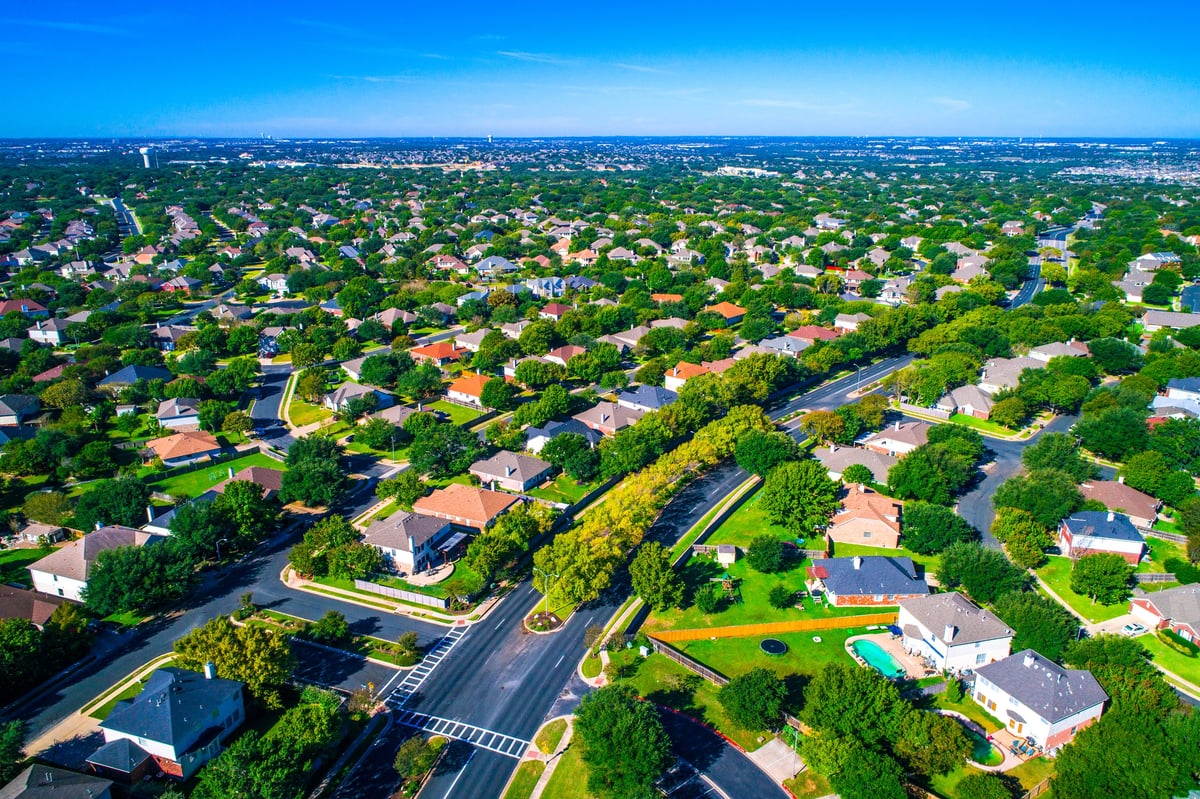
- Homes in large metro cores or denser urban neighborhoods
- Working farms with income-producing farmland as part of the deal
- Properties used as rentals, second homes or short-term income
- Homes with substantial structural or hazard problems unless cured before closing
- Land-only purchases or properties with excessive acreage
USDA Loan Credit Score and DTI Requirements
The USDA itself does not publish a single mandatory credit score, but participating lenders — who fund the loan — have internal minimums and overlays. In practice, a 640 score is the common standard for a smooth USDA approval.
A low credit score is not the only credit problem underwriters look at. Federal debt defaults, unpaid collections, recent bankruptcies and foreclosure history all matter. USDA guidelines generally require these items to be resolved or seasoned before approval.
Debt-to-income ratio (DTI) works hand in hand with credit. The USDA's automated system reviews the total of your housing payment plus all other monthly debts against your gross monthly income. A higher DTI file is sometimes possible with compensating factors, but it usually needs a lower credit risk or more reserves.
Housing ratio
Housing payment compared with gross monthly income.
Total debt ratio
All debts including cards, car loans and student loans.
Standard approval path
Many participating lenders use 640 as their minimum score and approve USDA files with standard documentation.
Possible with extra review
Some lenders will consider these files with compensating factors such as strong income, reserves or low DTI.
Difficult but not impossible
Fewer lenders offer this path, and the file needs strong justifications from the underwriter. A credit improvement plan may be the faster route.
Credit minimums are set by individual lenders. Lower scores and higher DTI files must meet additional USDA and lender criteria and are not guaranteed.
Your Down Payment, Fees and Closing Costs
Zero down payment does not mean zero cost — but it is one of the lowest-cash routes to homeownership available today.
Down payment
0%
USDA guaranteed loans finance 100% of the purchase price for eligible buyers — no down payment required.
Upfront guarantee fee
1%
A one-time fee of 1% of the loan amount, commonly financed into the loan rather than paid in cash at closing.
Annual fee
0.35%
A yearly fee of roughly 0.35% of the loan balance, paid monthly — lower than FHA's monthly insurance.
Closing costs
2–6%
Lender fees, title, escrow and recording costs vary by state and lender; gift funds are allowed for eligible borrowers.
Compare Monthly Payments
Illustrative estimates using sample rates — not a quote.
USDA Guaranteed
Down payment $0
$2,280/mo
FHA (3.5% down)
Down payment $12,250
$2,273/mo
Conventional (97% LTV)
Down payment $10,500
$2,273/mo
Lowest cash to close
$0
USDA guaranteed loan: no down payment
Highest down payment in this comparison
$12,250
FHA 3.5% down payment example
Estimates only. Monthly figures combine principal, interest and the program's annual fee at the sample rates shown; they do not include taxes, homeowners insurance or HOA dues and assume a 30-year term. Actual rates, fees and payments depend on lender pricing, credit, occupancy and current market conditions. Conventional PMI is omitted because it can end once the loan reaches 78% LTV; FHA and USDA fees generally apply for the life of the loan.
USDA vs FHA vs Conventional vs VA Loans
USDA is the only government-backed loan built specifically for rural, moderate-income buyers — but for many households FHA, VA or a low-down conventional loan is the better fit.
| Feature | USDA | FHA | Conventional | VA |
|---|---|---|---|---|
| Minimum down payment | 0% | 3.5% | 3–5% | 0% |
| Typical credit minimum | 640 | 580+ | 620+ | 620 |
| Property location | USDA-eligible area | Anywhere | Anywhere | Anywhere |
| Income limit | Yes — county cap | No | No | No |
| Monthly mortgage insurance | Annual fee ~0.35% | Yes, for life | Usually, until 78% LTV | None |
| Upfront fee | 1% guarantee fee | 1.75% MIP | None | Funding fee varies |
| Occupancy | Primary only | Primary only | Any | Primary only |
| Who can use it | Income-eligible rural buyers | Most buyers | Strong-credit buyers | Veterans & service members |
Choose USDA when
Your household income is under the county limit, the property is in an eligible area and you want the lowest cash to close.
Look elsewhere when
The property is in a city core, your income exceeds the cap, or you are an eligible veteran (VA usually wins) or buying an investment property.

What USDA Loan Requirements Look Like in Practice
Here is an illustrative profile of a household that meets USDA loan requirements. These are example figures for illustration — your own numbers will depend on the county, property, credit and current rates.
Household income
$68,000 / yr
Two adults, both counted — under the county limit
Home price
$310,000
In a USDA-eligible area outside a metro core
Down payment
$0
100% financing through the guaranteed program
Upfront guarantee fee
$3,100
1% of the loan, financed into the balance
Monthly payment (P&I + annual fee)
≈ $2,055
At a sample 6.25% rate, 30-year term
Estimated closing costs
$6,000–$9,000
Varies; gift funds permitted for eligible buyers
How to Apply for a USDA Loan
The USDA loan process is similar to other mortgages, with two extra checks — the underlying property location and the borrower eligibility review.
Check eligibility early
Confirm the property address on the USDA map and estimate your household income against the county limit before you shop.
Get pre-approved
A loan officer reviews income, credit and assets, submits the USDA eligibility request and returns a pre-approval you can shop with.
Make an offer
Present your pre-approval to the seller. Confirm the home meets USDA property standards with your agent and inspector.
Underwriting and USDA review
The lender underwrites the file and the USDA issues its conditional commitment. Additional documents may be requested.
Close and move in
Sign closing documents, fund the loan and receive the keys. You must move in and make the home your primary residence.
Want a smoother process? Use the loan officer's lender checklist before you apply: mortgage documents checklist.
Common Mistakes With USDA Loan Requirements
Most delays come from these five issues. They are easy to avoid when your loan officer reviews your file early.
Explore Your Loan OptionsRelying on an old eligibility map
USDA maps are updated over time. An address that was eligible a few years ago may no longer qualify — always check the current map.
Leaving out a household member's income
Income from every adult who will live in the home is counted for the limit, even if they are not on the loan. Hiding it is a serious problem.
Buying before checking the property
Inspections and USDA property standards can expose safety issues. Have the home checked before you commit.
Ignoring the annual fee
The upfront fee can be financed, but the annual fee changes your monthly payment. Compare offers on the full monthly cost.
Opening new credit mid-process
A new car loan or card can push your DTI over the limit after pre-approval. Avoid major credit changes until you close.
Keep Reading
Related Home Financing Guides
First-Time Home Buyer Options
A side-by-side look at low and no-down-payment programs for first-time buyers.
Read the guideDown Payment Assistance Programs
State and local help that can cover closing costs alongside a USDA loan.
Read the guideFHA Loan Requirements 2026
Credit, income and down payment rules for buyers outside USDA-eligible areas.
Read the guideUSDA Loan Requirements: Frequently Asked Questions
The questions rural buyers and their families ask us most often.
The main USDA loan requirements are an eligible rural property location, household income at or below the county limit, a credit history acceptable to the lender (often 640 or higher), use of the home as a primary residence, and U.S. citizenship or eligible immigration status with a valid Social Security number.
Saman Khanian
Saman Khanian is the CEO of Equitable Lending, a Los Angeles mortgage lender helping first-time buyers, homeowners and investors finance homes across California and beyond. He writes practical guides on FHA, VA, USDA, conventional and Non-QM lending, focused on explaining eligibility and costs in plain terms.
View Full ProfileDisclosure: This article is for informational purposes only and does not constitute a loan commitment, rate quote, or financial, legal or tax advice. USDA loan eligibility and approval depend on USDA guidelines, lender guidelines and overlays, and your individual qualifications — meeting a stated requirement does not guarantee approval, and program rules, income limits and fees can change. Figures shown are illustrative; confirm current requirements with a licensed loan officer. All loans are subject to credit approval and underwriting. Equal Housing Opportunity. Equitable Lending — NMLS #1124483, DRE #01941713. See our Licensing Information and speak with a licensed loan officer about your situation.
Buy Your Home With No Down Payment
Talk with an Equitable Lending mortgage professional about USDA loan requirements for your specific goals, credit and budget. We'll check income limits, location eligibility and fees — no obligation.
NMLS #1124483 · DRE #01941713 · 2824 South Robertson Blvd, Los Angeles, CA 90034